CRM and follow-up
ProblemA CRM should show what is happening in the business, not just store contacts. FixBusiness Essentials is the main core CRM and operating system plan.
CRM Basics
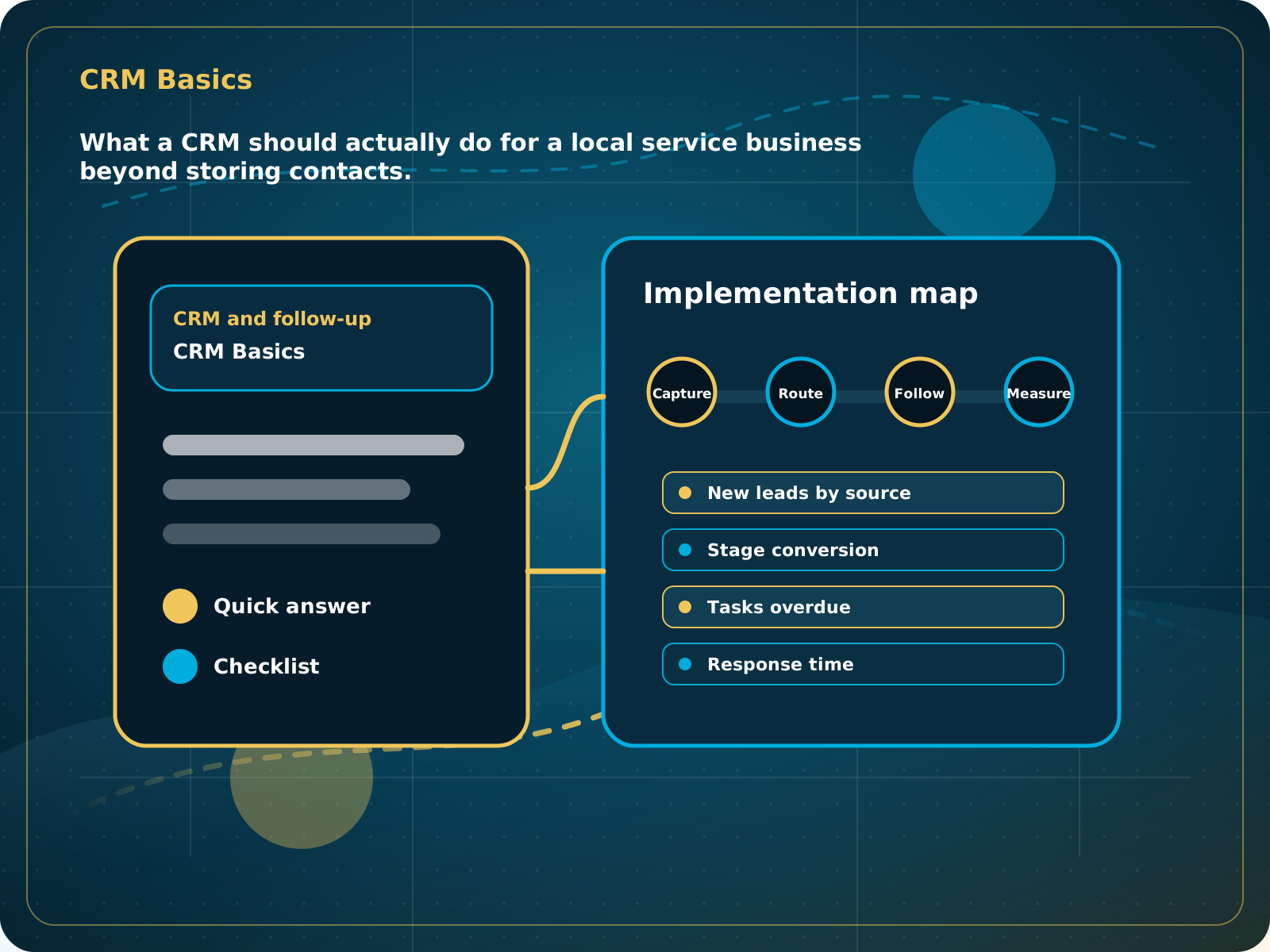
What a CRM should actually do for a local service business beyond storing contacts.
Leads capturedConnected
AI responseConnected
Reviews requestedConnected
Follow-up sentConnected
Local Business CRM Basics
The team can see every open opportunity, what needs attention, and what happened after each inquiry.
Implementation blueprint
1Customer action 2CRM capture 3Follow-up 4Owner visibility
Turn the guide into a working business process.
A CRM should show who contacted the business, where they came from, what they need, what stage they are in, who owns the next step, and what follow-up happened.
Make the next step obvious.
Store the signal where the team can work it.
Send, assign, or remind the next action.
Measure whether the process is working.
What a CRM should actually do for a local service business beyond storing contacts.
Quick answer: A CRM should show who contacted the business, where they came from, what they need, what stage they are in, who owns the next step, and what follow-up happened.
What to know first
A CRM should show what is happening in the business, not just store contacts. It should make lead handling visible and repeatable.
The goal is not to add another disconnected tool. The goal is to make the business easier to run. A strong process captures the lead or customer signal, stores it where the team can see it, triggers the right next step, and creates a clear outcome.
Implementation checklist
- Contacts and conversations
- Pipeline stages
- Tasks and reminders
- Forms, chat, calls, and booking capture
- Reviews, reporting, proposals, invoices, and payments
How to put this into a real system
Start by deciding what the customer should do next. That may be calling, filling out a form, booking, leaving a review, replying to a message, or referring someone. Then make sure that action lands in a place the business can actually manage.
For a local service business, the best version of this process usually has four parts: a simple customer-facing action, a CRM record, an automated or assigned follow-up step, and a visible outcome the owner can review later.
| Layer | What should happen | Why it matters |
|---|---|---|
| Customer action | The next step is obvious and easy to complete. | Friction kills otherwise good opportunities. |
| CRM capture | The action creates or updates a contact, opportunity, task, or conversation. | The team can see what happened and who owns it. |
| Follow-up | The system sends, assigns, or reminds the next step. | Speed and consistency improve without adding more pressure. |
| Review | The owner can see activity, gaps, and outcomes. | Improvement becomes practical instead of theoretical. |
Common mistakes to avoid
- Using a CRM only as a contact database
- No pipeline discipline
- No source tracking
- No automation for basic follow-up
What to measure
- New leads by source
- Stage conversion
- Tasks overdue
- Response time
- Revenue or booked jobs by source
When this is working
The team can see every open opportunity, what needs attention, and what happened after each inquiry.
How Lead Media Solutions connects this
Business Essentials is the full CRM and operating system starting point.
Lead Media Solutions turns this from a one-off task into part of the operating system. The right setup can connect the action to the CRM, trigger follow-up, support reviews, route conversations, and give the team a clearer view of what needs attention.
Best next step
Business Essentials is the main core CRM and operating system plan.
Related starting points
Choose the offer by the actual problem.
AI Receptionist
The business has a response-speed problem.
Test the AIFoundation System
The business has a trust and social proof problem.
Start Foundation SystemBusiness Essentials
The business needs the core operating system.
See Business EssentialsBusiness Essentials
Start with the 15+ page CRM-connected website inside Business Essentials.
Build the Core SystemGuide FAQ
Answer-focused summary.
What is the main point of the Local Business CRM Basics?
A CRM should show who contacted the business, where they came from, what they need, what stage they are in, who owns the next step, and what follow-up happened.
Should I use this before buying software?
Yes. Use the guide to understand the gap, then choose the simplest offer that fixes it.
Can Lead Media Solutions help implement this?
Yes. The relevant LMS offer can connect this process into reviews, AI, CRM, website, follow-up, or reporting.